Exploring the Balanced Plate Framework for Meal Composition
An educational resource on understanding nutrient distribution through visual plate models
Educational content only. No promises of outcomes.
Origins of Plate-Based Models
Visual plate-based eating guides have evolved over decades as a way to communicate proportion concepts in nutrition. These frameworks emerged from public health campaigns seeking to make dietary guidance more accessible and intuitive to general populations. Educational institutions and health organizations developed visual representations to complement textual nutritional guidelines, recognizing that divided plate imagery could convey composition principles without requiring mathematical calculations or detailed nutrient knowledge.
The concept builds upon fundamental principles in nutrition communication, where visual representation simplifies complex information about macronutrient distribution and food group inclusion. Different countries and health bodies have adapted this visual approach, tailoring proportions and categories to local food cultures and dietary patterns.
Core Division Principles
Typical Proportions and Rationale
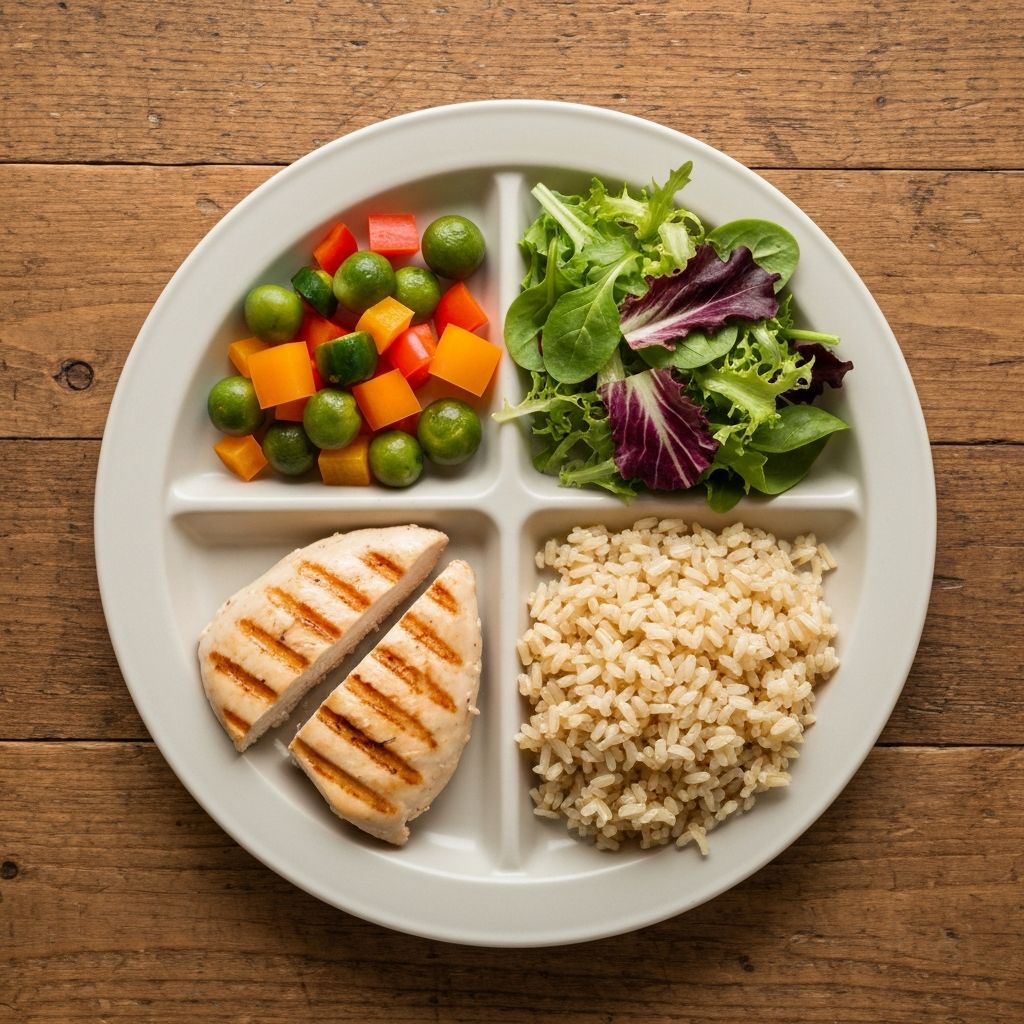
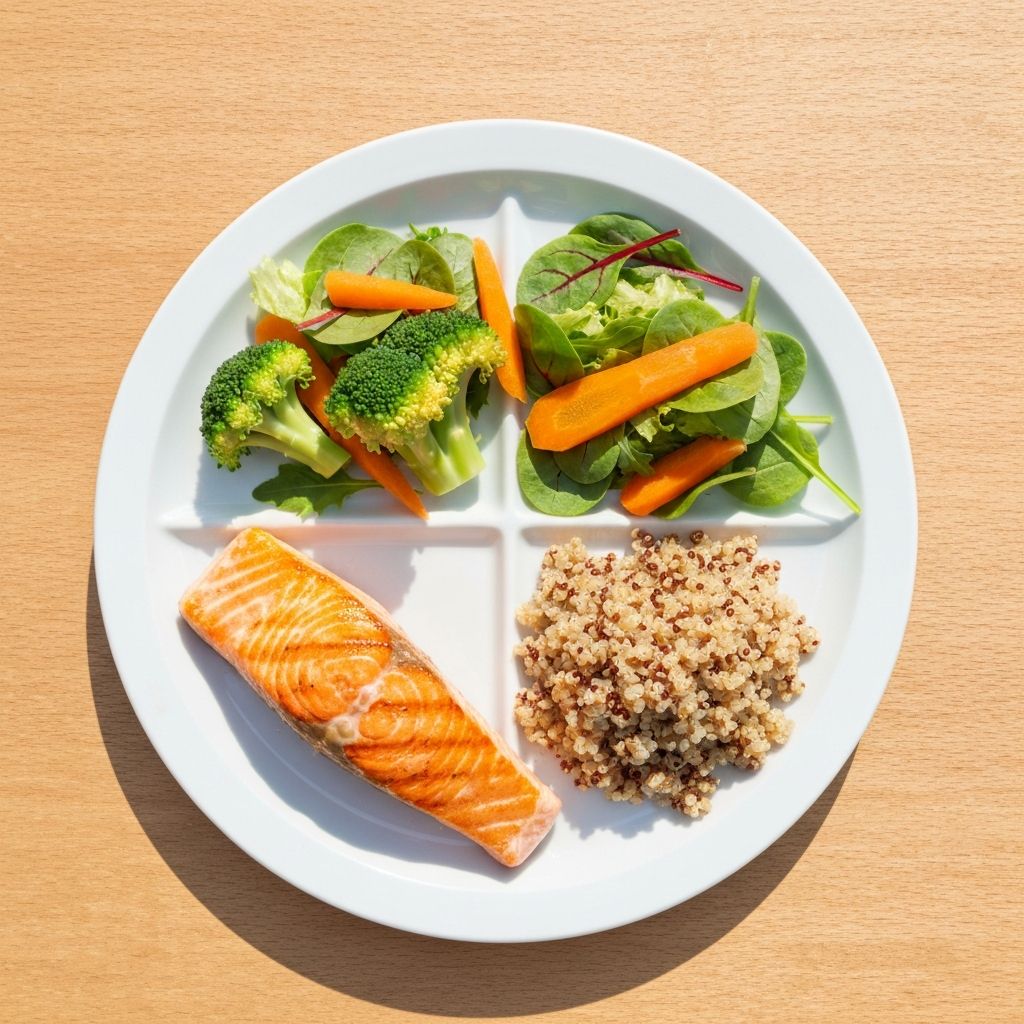
The balanced plate model typically divides plate space into functional sections. A common framework suggests filling approximately half the plate with vegetables and fruit, dedicating a quarter to protein-rich foods, and a quarter to whole grains or starchy carbohydrates.
This division reflects the principle that vegetables and fruits provide substantial micronutrient and fibre contributions while maintaining lower energy density. Protein sources support various physiological functions, while whole grains contribute carbohydrates, fibre, and micronutrients.
The proportions represent one approach to balancing macronutrient delivery across a meal structure. Individual variation in activity level, preferences, and dietary needs influences whether these standard proportions suit any particular person's daily eating patterns.
Component Roles in Nutrient Distribution

Vegetable and Fruit Section
Typically occupying half the plate, vegetables and fruits provide concentrated sources of vitamins, minerals, and dietary fibre. This section emphasizes colour variety as an indicator of diverse phytonutrient profiles. The high water and fibre content contributes to satiety while providing substantial nutrient density relative to energy content.
Protein Component
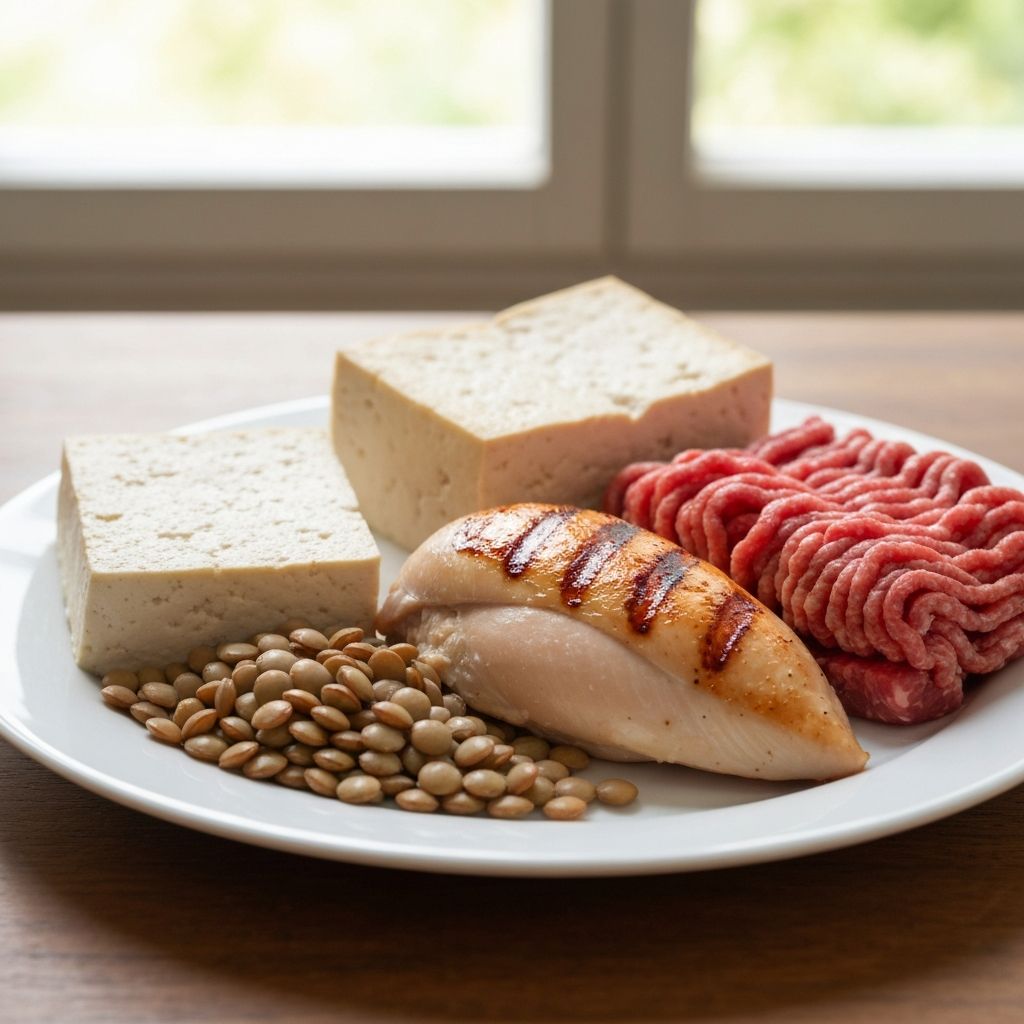
Positioned as a quarter of the plate, protein sources include animal-based options (fish, poultry, meat) and plant-based alternatives (legumes, tofu, nuts). Proteins supply amino acids necessary for various physiological processes. Different sources carry distinct micronutrient profiles, ranging from iron and B vitamins in meat to magnesium and fibre in legumes.
Whole Grain and Starch Quarter
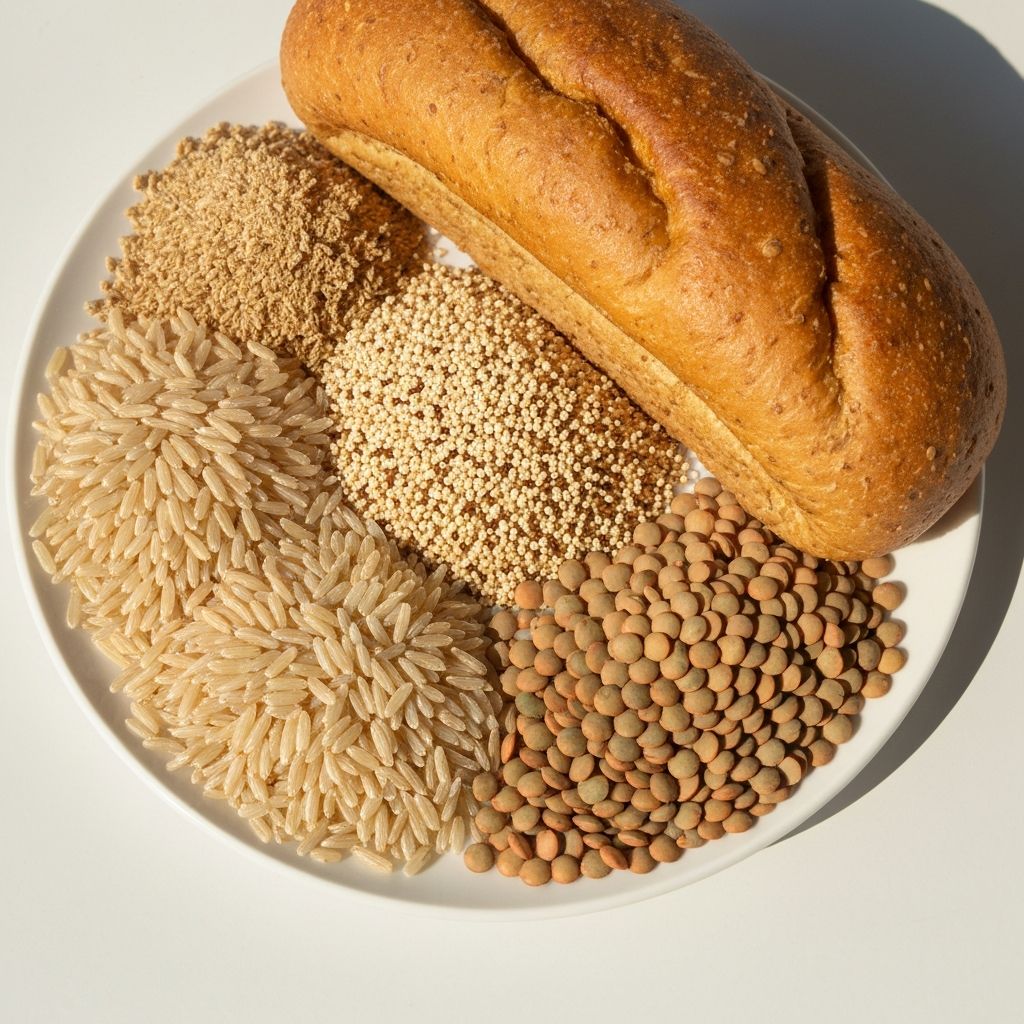
The final quarter typically comprises whole grains, legumes, or starchy vegetables. This section delivers carbohydrates as the primary energy source alongside fibre and B vitamins. Whole grain selection emphasizes retaining the bran and germ layers, which contain micronutrients and fibre absent in refined grain products.
Healthy Fats and Their Placement
Fats represent an essential macronutrient supporting nutrient absorption, hormone production, and cellular function. Within plate-based models, fats appear both as components of primary foods (fats naturally present in fish, nuts, seeds, avocados) and as preparation methods (oils used in cooking). Rather than appearing as a separate plate section, healthy fats integrate throughout the meal composition.
Fat-containing foods like fatty fish, nuts, and seeds contribute both energy and micronutrients. Cooking methods and added oils influence total fat quantity in a meal. This integration approach reflects understanding that fats naturally accompany many whole foods rather than functioning as isolated components.
Fluids and Dairy Considerations
Beverages and fluid intake sit outside the primary plate divisions in most models. Water represents the essential fluid, supported by other unsweetened beverages. Dairy products occupy a distinct position in some frameworks, sometimes depicted as a smaller circle or section placed adjacent to the main plate.
The placement of dairy outside the primary plate divisions acknowledges that beverage consumption follows different patterns than solid food portions. Different models incorporate dairy differently, reflecting varying approaches to integrating this food group into visual guidance systems.
Comparison to UK Eatwell Guide
The UK Eatwell Guide represents the official British framework for communicating healthy eating patterns. This guide similarly divides foods into groups with suggested proportions, presented in a plate-style visual format. The Eatwell Guide emphasizes starchy carbohydrates as an energy foundation, vegetables and fruit for micronutrients and fibre, protein sources, dairy, and fats.
Both the general balanced plate model and the Eatwell Guide share fundamental principles: vegetables dominating by volume, inclusion of whole grains, protein variety, and limited discretionary items. Regional variations reflect local food cultures and specific health priorities within different populations.
Individual Variation Factors
Standard plate proportions serve as general starting points rather than rigid prescriptions. Activity level significantly influences energy requirements; athletes and active individuals may require different carbohydrate quantities than sedentary populations. Age, metabolism, and personal food preferences create additional variation.
Life stage considerations matter substantially. Growing children, adolescents, pregnant individuals, and older adults may benefit from adjusted proportions. Dietary preferences, food allergies, and cultural food traditions all influence how a visual framework translates into actual meal composition for any specific person.
Detailed Component Explorations
Historical Development
Explore the evolution of visual plate guides from early nutrition campaigns through modern frameworks, understanding how communicators simplified complex nutritional science into accessible visual formats.
Explore the model furtherVegetable-Dominant Sections
Understand the nutritional rationale for emphasizing vegetables in plate models, including micronutrient density, fibre contributions, and how proportions relate to nutrient delivery across eating occasions.
Read more about componentsProtein Source Roles
Examine how different protein sources contribute to balanced meal structures, comparing nutritional profiles of animal and plant-based options within the framework.
Explore this modelWhole Grains and Starch
Investigate the role of whole grains and starchy vegetables in proportion models, exploring how this component supports energy provision and micronutrient inclusion.
View detailed examplesVariations and Adaptations
Discover how plate frameworks adapt across different populations, activity levels, and preferences, demonstrating flexibility within the core proportion principles.
Discover the frameworkPopular Model Comparison
Compare established plate models through research findings and evidence, understanding similarities and differences in how various frameworks address meal composition.
Learn more aboutFrequently Asked Questions
What is the balanced plate model?
The balanced plate model is a visual eating framework that divides a plate into sections representing different food groups. Typically, it suggests filling half the plate with vegetables and fruit, a quarter with protein sources, and a quarter with whole grains or starchy foods. This model serves as an educational tool for understanding meal composition and nutrient distribution without requiring detailed nutritional calculations.
How do proportions relate to nutrient density?
Nutrient density refers to the concentration of vitamins, minerals, and other beneficial compounds relative to energy content. Vegetables and fruits typically have high nutrient density with lower energy density, meaning they provide substantial nutrition per calorie. Whole grains offer both energy and micronutrients. The plate division principle reflects this understanding by emphasizing volume of lower-energy-density foods alongside concentrated protein and carbohydrate sources.
Are these proportions universal?
No. The standard plate divisions represent common recommendations but require adjustment for individual circumstances. Activity level, age, metabolism, health status, and personal preferences all influence appropriate proportions. An athlete in heavy training may benefit from increased carbohydrate portions, while an older adult's requirements may differ significantly. The model provides a flexible starting framework rather than a universal standard.
How do different countries' models compare?
Different countries have developed plate models reflecting their local food cultures and dietary priorities. The UK Eatwell Guide, the US MyPlate model, and others share core principles of including vegetables, whole grains, and protein while differing in specific proportions and emphasis. These variations reflect regional food availability, cultural eating patterns, and population health priorities rather than contradicting fundamental nutrition science.
What role does portion control play?
Portion size influences total energy and nutrient intake at any eating occasion. The plate model uses visual proportions as a communication tool—the actual quantity depends on plate size and personal energy needs. A person might maintain the same proportional divisions while adjusting absolute portion sizes based on hunger, activity, and dietary goals. This flexibility distinguishes visual proportion guidance from rigid portion prescriptions.
How do I account for healthy fats?
Healthy fats integrate throughout the plate rather than appearing as a separate section. They appear naturally in fish, nuts, seeds, and avocados within the protein or vegetable sections. Cooking oils and dressings provide additional fat. Rather than taking up dedicated plate space, fats become part of food preparation and selection within the existing divisions. This integration reflects that fats naturally accompany whole foods.
Do plate models account for snacking?
The plate model primarily addresses structured eating occasions. Snacking patterns vary widely among individuals and cultures. Some people incorporate snacks as mini-meals following similar proportional guidelines, while others prefer simple combinations. The model's flexibility allows it to apply to various eating patterns, though it doesn't prescribe specific snacking approaches—that remains an individual choice.
How does research support plate models?
Research on plate-based eating patterns generally associates following proportion frameworks with dietary patterns that meet micronutrient recommendations and include diverse food groups. Studies examine adherence rates and dietary quality markers among populations using visual guides. Research findings suggest that simple visual frameworks help people make more consistent food choices, though outcomes vary based on individual implementation and concurrent lifestyle factors.
What about beverages in the model?
Beverages sit outside the primary plate divisions in most frameworks. Water represents the primary fluid intake recommendation across all models. Other beverages like tea, coffee, and unsweetened alternatives follow personal preference. Some frameworks include dairy beverages in the dairy component rather than within main plate sections. The emphasis generally falls on water as the main drinking fluid across eating patterns.
How do I adjust proportions for different dietary approaches?
The core principle of including vegetables, proteins, and whole grains accommodates various dietary approaches. Vegetarian or vegan eating simply substitutes plant-based protein sources while maintaining proportional structure. Gluten-free eating uses different grains but applies the same proportional framework. The model's adaptability allows modification for specific dietary needs while preserving the underlying principle of balanced food group inclusion within meals.
Continue Exploring Meal Composition Frameworks
Visit our detailed blog sections to deepen your understanding of specific components, historical development, and research perspectives on plate-based nutritional frameworks.
Explore detailed articles